- Home
- Blog
- Musty or Moldy Smell From Your Vents in San Diego County? What It Means and What to Do About It
Musty or Moldy Smell From Your Vents in San Diego County? What It Means and What to Do About It
Got musty smells from your AC vents? Learn causes and simple fixes to keep your home fresh in San Diego County.
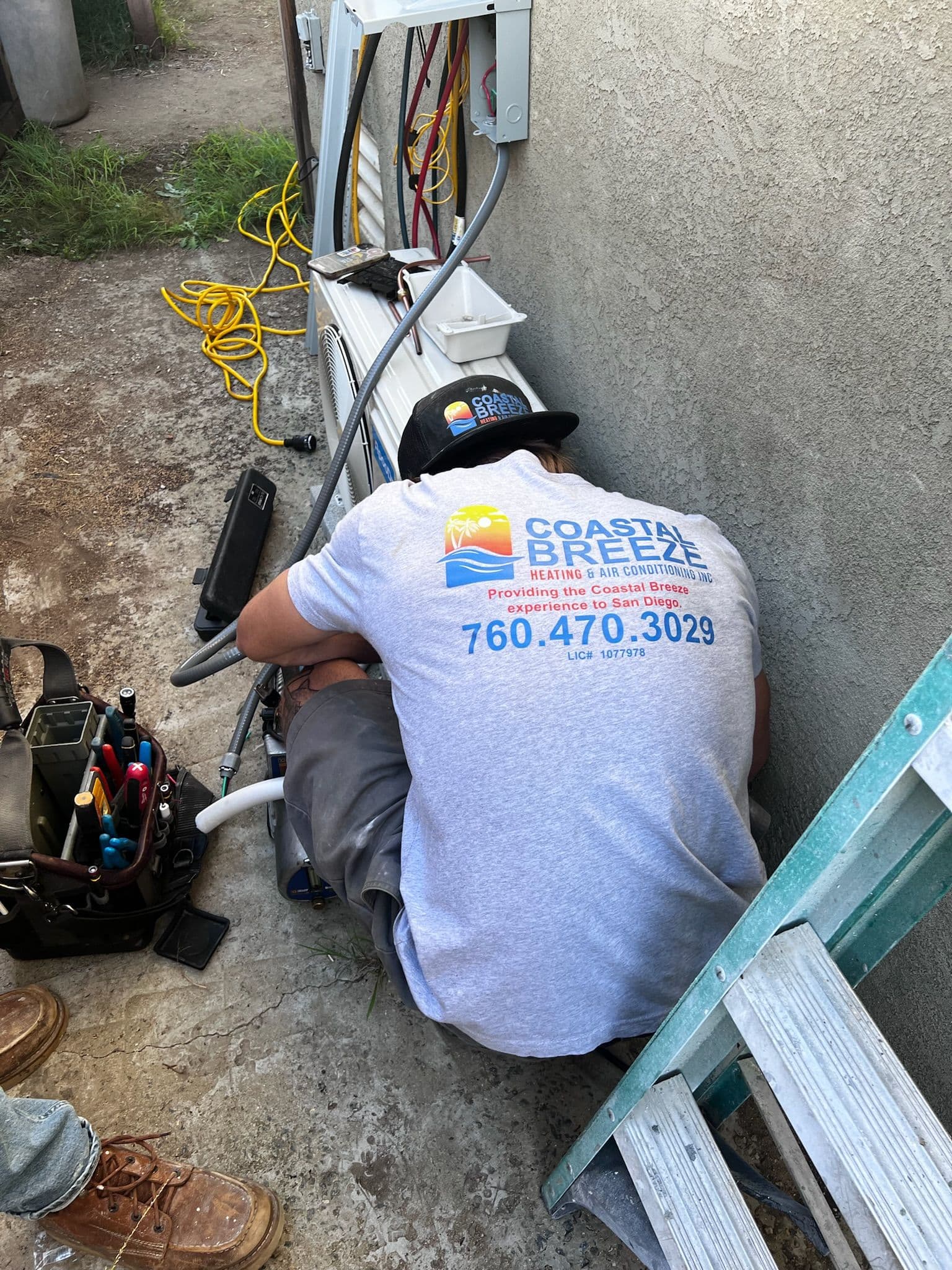
You turned on the AC, or it kicked on by itself in the afternoon, and the house filled with a smell. Damp. Earthy. A little like a basement or an old gym bag or the inside of a tent you packed away wet. It hits you at the vents, it fades when the system cycles off, and it comes right back the next time the air handler runs. Now you're standing in the hallway sniffing a supply register and quietly worrying about the one word nobody wants to say about the air their family breathes: mold.
Take a breath, even if it's a musty one. This is one of the most common calls we get all summer, and it climbs every year right about now, when systems are running hard for weeks on end. It's also one of the most Googled HVAC questions in the country, some version of "why does my AC smell musty," and it ranks and spikes for a reason: the smell is specific, it's unpleasant, and it feels like a health problem, so people want an answer immediately. We understand the urgency. We also want to slow you down for about ten minutes, because the honest truth is that a musty AC smell is usually a fixable maintenance issue, not a disaster, and knowing what's actually causing it will keep you from panicking and, just as importantly, from getting talked into a repair that costs ten times what the real fix should.
We're Coastal Breeze Heating & Air Conditioning, based in Carlsbad and working all over North County San Diego, and this post walks through the three things that actually cause that smell, why homes near the coast are a little more prone to it, what you can safely check yourself before calling anyone, and roughly what each fix should cost so you can tell a fair quote from a rip-off.
First, What That Musty Smell Actually Is
That damp, earthy odor is almost always the smell of biological growth, mildew, mold, or bacteria, getting a foothold somewhere inside your cooling system and then having its scent blown out into your rooms every time the fan runs. It is not, in the vast majority of cases, a sign that your house is full of toxic black mold or that your ductwork needs to be torn out. It's a sign that some part of your system stayed wet when it shouldn't have, and wet plus dark plus a little dust is exactly the recipe biology loves.
Here's the thing to understand about air conditioning: making cold air is a wet process. As we covered in our guide to new systems that leave a house humid, your AC cools your home partly by pulling moisture out of the air, and that moisture has to condense somewhere and drain away. That means there is a cold, damp component sitting inside your system every time it runs. When everything is clean and draining properly, the water leaves and nothing grows. When dust builds up, or water stops draining, that dampness lingers, and the smell follows. So when you're chasing a musty odor, you're really chasing moisture that isn't leaving the way it should. Three spots are the usual suspects.
Cause One: A Dirty Evaporator Coil
The evaporator coil is the cold coil tucked inside your indoor unit, the one your warm house air blows across to get chilled. It's also permanently damp while the system runs, because that's where all that humidity condenses. Now picture what rides along in the air blowing across it, all day, all summer: dust, skin cells, pet dander, pollen, cooking residue. Some of it sticks to that wet coil. Over months and years you get a layer of damp gunk sitting in a cold, dark box, and that is close to a perfect habitat for mildew. When the fan pushes air through a coil like that, it picks up the smell and delivers it to every room.
A dirty coil is probably the single most common source of the classic "dirty sock" or musty AC smell, and it earns a nickname in the trade, "dirty sock syndrome," precisely because so many people describe it the same way. The frustrating part is that you usually can't see the coil without removing an access panel, and it's not a surface you should be poking at yourself, so this one often needs a technician to confirm and clean. The good news is that a professional coil cleaning solves it directly, and a clean coil paired with regular filter changes tends to stay clean.
Cause Two: A Clogged Drain Pan or Drain Line
This is the one we'd bet on most often, and happily it's usually the cheapest to fix. All that water condensing off the coil drips down into a drain pan and then runs out of your house through a small PVC pipe called the condensate drain line. That line is narrow, it's dark, it's full of moving water, and over time it grows a slimy biofilm of algae and mildew inside it. Eventually the gunk builds up enough to slow or completely block the flow.
When the line clogs, the water has nowhere to go. It backs up and sits in the drain pan, sometimes for days or weeks, turning into a stagnant little pond inside your air handler, and stagnant water smells exactly like what you're smelling. Worse, standing water is how you get the other half of this problem: leaks. A homeowner on the r/hvacadvice forum this past July described it perfectly, noticing a new musty smell in the house one night and then finding water stains on the furnace the next day. That sequence, smell first, then water where water shouldn't be, is the signature of a backed-up condensate system, and it's worth taking seriously quickly, because water pooling around an air handler or dripping onto a furnace can cause real damage the longer it goes on. The smell is the cheap early warning. The water damage is the expensive thing it's warning you about.
Cause Three: Actual Mold Growth in the Ducts
The one everybody fears is real, but it's the least common of the three, and it's important to keep it in perspective. If your ductwork has stayed damp, from a chronic drainage problem, from a duct leak that's pulling in humid attic or crawlspace air, or from a home that runs humid for other reasons, mold can establish itself on the duct surfaces or on dust that's collected inside them. Then every cycle blows that smell, and potentially spores, through the house.
Before you spiral, a reality check. A little dust on the inside of flex ducting is normal and is not mold, and homeowners misidentify it constantly. Another popular r/hvacadvice thread from this summer was simply a person asking whether the coating inside their flex duct was dust or mold, and the honest answer in cases like that is usually that you can't tell for certain from a phone photo, and neither can anyone else. Dust is gray and fuzzy and everywhere; mold tends to be patchy, darker, sometimes fuzzy or slimy, and it comes with that smell. If you genuinely have mold growing in ductwork, the fix is a real inspection and, sometimes, professional duct cleaning or repair. But, and this matters, duct mold is almost never the first thing to suspect and almost never the first thing an honest contractor should try to sell you. It's the answer you reach after the cheaper, far more common causes have been ruled out. Keep that order in mind, because it's the order that protects your wallet.
Why Homes Near Carlsbad and Oceanside Are a Little More Prone to This
If you live along the coast, from Carlsbad up through Oceanside and Carlsbad's neighbors in Encinitas, Solana Beach, Del Mar and La Jolla, you're not imagining that this seems to come up more here. The reason is the same marine layer that makes our summers so pleasant. Air coming off the ocean carries real moisture, and that gray morning blanket keeps humidity up even when temperatures stay mild.
More moisture in the air you're cooling means more water condensing on that coil and more water running through that drain line, which is simply more raw material for growth and more chances for a slow clog to matter. Add in the mild coastal temperatures, which mean systems often run in long, gentle cycles that keep everything damp for extended stretches rather than blasting cold and drying out between runs, and you have conditions that are a notch friendlier to mildew than, say, the dry inland heat out in Escondido or San Marcos. It's not a dramatic difference, and it's absolutely not a reason to worry more than your inland neighbors. It just means that if you're within a few miles of the water, staying on top of filter changes and getting your condensate line cleared as routine maintenance pays off a little more for you than for most of the country. That same coastal air is tough on HVAC equipment in other ways too, and it's worth knowing the whole picture if you live near the beach; we get into what salt and marine moisture do to outdoor units in our mini split guide for coastal North County. The moisture that makes our climate lovely is the same moisture your system has to keep moving out of the house.
What You Can Safely Check Yourself Before Calling Anyone
Before you pay anyone, there are a few things you can look at on your own, safely, in a few minutes. None of these require opening up sealed equipment or touching anything electrical, and if any of them feels beyond your comfort level, there's no shame in stopping and calling a pro. But here's the safe DIY tour.
Start with the easiest and most likely win, your air filter. A filter that's clogged with dust restricts airflow and gives all that captured gunk a damp place to sit right in the air path, and a filthy filter can carry a musty smell all on its own. Pull it out and look at it. If it's gray and matted, replace it. Filters are a few dollars, they should be changed roughly every one to three months during heavy use, and this alone resolves a surprising number of mild odor complaints. This is genuinely the first thing we'd want you to try.
Next, find your condensate drain line. It's usually a white PVC pipe, often about three-quarters of an inch, coming off your indoor air handler, frequently in a garage, closet, attic, or alongside the furnace, and it typically drips outside near your foundation or into a drain. Go outside while the AC is running on a warm day and check whether water is actually dripping from the end of that line. On a humid day a working system should be producing a steady trickle. If it's bone dry while the system runs hard, that's a strong hint the line is clogged and water is backing up inside instead. While you're at the indoor unit, glance at the area around the air handler and, if you have one, the drain pan you can see, and look for standing water, overflow stains, or that furnace-water-stain situation the forum poster ran into. Seeing pooled or stained water tells you this has moved past a smell and into a drainage problem worth addressing promptly.
Finally, do a simple location test with your nose. Is the smell strongest right at the supply vents when the system runs, and does it fade when the system is off? That pattern points at the coil or drain, the equipment itself. Does the house smell musty in a particular room or closet even with the AC off? That might be a separate moisture issue in the house rather than your HVAC. It's a crude test, but it helps you and any technician start in the right place. What you should not do is start pulling apart the air handler, poking at the coil, or climbing into the attic to wrestle with ductwork. Those crossovers into equipment are where a ten-minute check turns into a repair bill, and they're a fair place to hand off to someone who does it every day.
When It's a $50 Fix, a $500 Coil Cleaning, or a Duct Inspection
This is the part that protects you, because "my AC smells musty" or "my AC smells moldy" can end with a fifteen-dollar filter or, if you talk to the wrong company, a wildly inflated invoice. Here's the honest range, roughly, in the order you should hope for.
The cheapest and most common outcome is essentially a maintenance fix: a new filter and a cleared condensate drain line. Clearing that line is not exotic work, a tech typically flushes it out and applies a wet/dry vacuum to the end to pull the clog through, and it's often bundled into a basic service call or routine maintenance visit. Realistically you're looking at something in the neighborhood of a service-call fee up to a couple hundred dollars at most, and if you keep up with maintenance it's the kind of thing that gets handled before it ever becomes a smell. If someone diagnoses a clogged drain and the number they quote you has a comma in it, that's your cue to get a second opinion.
The middle tier is a professional evaporator coil cleaning, which is more involved because reaching and properly cleaning that coil takes time, sometimes partial disassembly, and the right cleaning agents. It's fair for this to land somewhere in the low-to-mid hundreds, often in the ballpark of a few hundred dollars up toward five hundred depending on your system and how bad the buildup is. That's a legitimate service that genuinely solves a dirty-coil smell, and it's reasonable to pay for.
The top tier is a real duct inspection and, if warranted, duct cleaning or repair, and this is exactly where you should slow down and get more than one opinion, because it's the most expensive path and the one most prone to being oversold. A genuine duct problem does exist and does cost real money to fix properly. But you want to arrive there by ruling out the filter, the drain, and the coil first, not by taking one company's word that your ducts are the culprit. Which brings us to the example every homeowner should keep in the back of their mind. Another homeowner on r/hvacadvice this summer shared a quote of twenty-six hundred dollars to "clean out the microorganisms" in their system, and the reaction from people in the trade was close to unanimous: that's the sound of a scare-and-upsell, wrapping a basic cleaning in ominous language to justify a giant number. When you hear vague, frightening phrasing, "microorganisms," "biological contamination," "toxic buildup," attached to a four-figure quote and not much specific diagnosis, that's the moment to pause, ask exactly what was found and how, and call someone else before you sign anything. If you want a benchmark for what an honest, itemized bill should actually look like, our guide to reading a fair HVAC quote in San Diego walks through it line by line. Fear is the most expensive thing they're selling.
What NOT to Do: Please Don't Put Bleach Tablets in the Drain Pan
We have to single this one out, because it's all over the internet as a home remedy and it can quietly wreck your equipment. The instinct is understandable, the drain pan smells, bleach kills stuff, so people drop bleach tablets in the pan or pour straight bleach down the condensate line to "clean it out."
Here's the problem. Bleach is corrosive to metal, and the parts it's sitting on and running past, the drain pan, the coil, and the metal fittings in your system, are often exactly the metals bleach attacks: aluminum, copper, and galvanized steel. Left to sit and repeat, bleach can pit and corrode a drain pan until it leaks, degrade fittings, and damage the coil itself, and now your cheap deodorizing trick has turned into a genuine equipment repair. On top of that, bleach fumes concentrated inside your air handler are not something you want in the air path feeding your house. It treats the symptom for a day and creates a much more expensive problem underneath.
If you want to do something yourself to keep the drain line healthy between professional visits, the widely accepted safer approach is to pour a cup of plain distilled white vinegar into the condensate line's access point every month or two during cooling season. Vinegar discourages the slime from building up without the corrosive punch of bleach. It's mild, it's cheap, and it won't eat your drain pan. And if there's any doubt, ask a technician to show you where the access point is and how much to use, so you're helping your system instead of slowly dissolving it.
The Bottom Line
A musty smell from your vents is your system telling you that moisture is sitting somewhere it shouldn't, and nine times out of ten the culprit is a dirty coil or, more often, a clogged condensate drain, not toxic mold in your walls. Start with the free and cheap checks: change the filter, confirm your drain line is actually draining, and look for standing water around the air handler. Living near the coast makes staying on top of that maintenance a little more worthwhile, thanks to the same marine moisture that keeps our summers mild. And whatever you do, skip the bleach tablets, they can corrode the very parts you're trying to protect, and reach for plain white vinegar instead.
Above all, keep the costs in perspective. This usually starts as a modest maintenance fix, sometimes climbs to a fair few-hundred-dollar coil cleaning, and only rarely rises to a real duct problem, and anyone leading with a four-figure quote about "microorganisms" before ruling out the simple stuff has earned your skepticism, not your signature.
If the smell won't quit, or you've found water where water shouldn't be, or you just want someone to tell you plainly whether it's a twenty-dollar filter or something more, that's exactly the kind of thing we're glad to look at. Reach out to Coastal Breeze Heating & Air Conditioning in Carlsbad, and we'll find where the moisture is hiding, tell you honestly what tier of fix it actually is, and clear the air, without inventing a monster to sell you. You should be able to breathe easy in your own home.
Coastal Breeze Heating & Air Conditioning · Serving Carlsbad, Oceanside, Encinitas, Vista, San Marcos, Del Mar, Solana Beach, La Jolla & North County San Diego
Call or text: (760) 470-3029
Email: coastalbreezeSD@gmail.com
Web: coastalbreezesd.com
Hours: Mon–Fri 7am–8pm · Sat–Sun 9am–5pm
CA Lic. #1077978
Old-school craftsmanship meets coastal comfort. Local expertise. Honest work. Comfort that lasts. That's the Coastal Breeze Way.