- Home
- Blog
- Mini Split vs. Central AC in Carlsbad and North County San Diego: Which Is Right for Your Home (and What Nobody Tells You About Sizing)
Mini Split vs. Central AC in Carlsbad and North County San Diego: Which Is Right for Your Home (and What Nobody Tells You About Sizing)
Discover whether a mini split or central AC suits your Carlsbad home. Get insights on sizing, costs, and coastal maintenance.
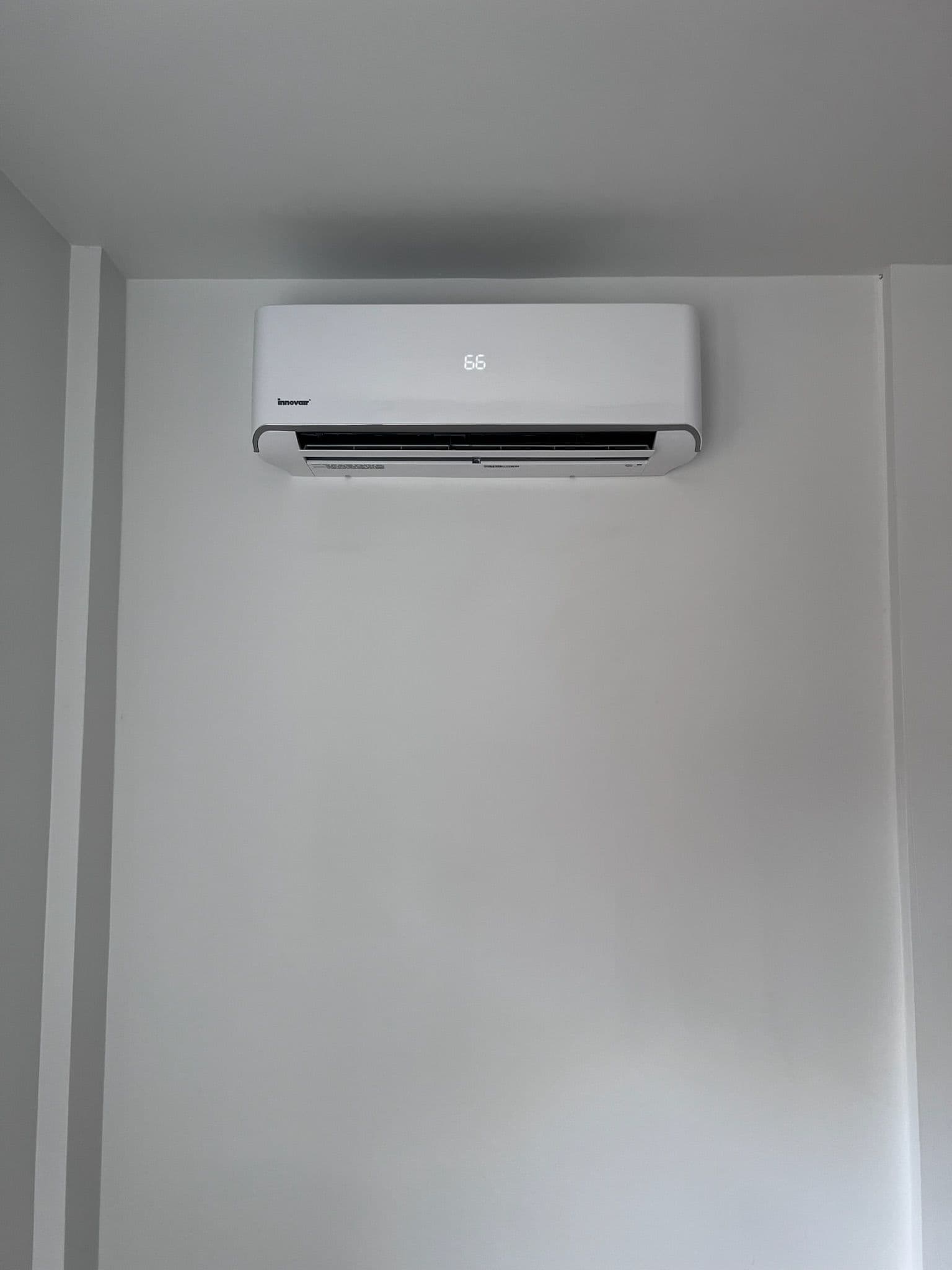
Mini splits are having a moment. Scroll through any home forum this summer and you'll see two versions of the same person over and over: the homeowner excited to finally cool that hot back bedroom or new addition without tearing into the walls, and the homeowner who already bought one, had it installed, and can't figure out why the room feels cold and clammy instead of just comfortable. Same equipment, two very different experiences, and the gap between them almost always comes down to sizing and expectations.
We're Coastal Breeze Heating & Air Conditioning, based in Carlsbad and working all over North County San Diego, and we install a lot of these systems. We also get called to fix a lot of them, usually ones that were sized off a square-footage chart or bought online and dropped in without a real plan. So this is the straight version so you can walk into the decision knowing what you're buying: when a mini split genuinely beats central AC for a home like yours, how to size one correctly, the "one head per room" rule and when it's fine to break it, what our coastal salt air does to these units, and what a professional install actually costs in North County in 2026. No pitch.
First, What a Mini Split Actually Is
Quick clarification, because the name hides what it does. A ductless mini split is a heat pump split into two pieces: an outdoor compressor unit and one or more indoor "heads" mounted on a wall, in a ceiling, or tucked into a soffit. Instead of pushing cooled air through a network of ducts like a central system, each head cools (and heats) the room it lives in directly. A thin bundle of refrigerant line and wiring runs between the outdoor unit and each head through a small hole in the wall, which is why you don't need ductwork.
That one design difference is the whole story. It's what makes mini splits brilliant for some situations and the wrong tool for others.
When a Mini Split Makes More Sense Than Central AC
Here's the honest rule of thumb: mini splits shine wherever running ductwork would be expensive, ugly, or impossible, and central AC wins when good ducts already exist or the whole house needs even, whole-home cooling from one system.
The clearest case for a mini split is a room addition or a converted space — a garage turned into an office, a bonus room over the garage, an ADU, a sunroom. Extending your existing ducts into a new addition is often a bigger, messier job than the addition itself, and the far end of a duct run rarely gets the airflow it needs anyway. A single mini split head handles that space cleanly, and it's why they've become the default for ADUs across North County.
The second strong case is an older home with no ductwork at all. Plenty of the classic homes in Encinitas, Leucadia, and the older pockets of Oceanside and Vista were built with wall or floor heaters and never had a duct system. Retrofitting central air into a house like that means opening walls and ceilings and losing closet space to chases. A mini split system gets you real cooling and heating without the demolition.
The third is the one or two rooms that never get comfortable — the west-facing bedroom that bakes all afternoon, the upstairs that the central system can't quite keep up with, the home office you added a wall of windows to. Rather than upsizing your whole central system to fix one stubborn room, a mini split zones that space on its own thermostat.
And where does central AC still win? When your home already has ductwork in decent shape, a central system is usually the more cost-effective way to cool the whole house evenly, and a single discreet supply register in each room looks like nothing at all. Mini splits are fantastic tools, but if you've got good ducts and want uniform whole-home comfort, ducted is often still the smarter buy. (If you're weighing whole-home comfort more broadly and thinking about heating too, it's worth reading our heat pump vs. central AC guide for North County, since a ducted heat pump is often the real alternative to consider.) The right answer depends on your specific house, which is exactly why sizing and design matter so much — and where most of the frustration online comes from.
How to Size a Mini Split Correctly (It's Not Just Square Footage)
This is the part that separates the happy homeowners from the frustrated ones, so read it closely.
Almost every DIY sizing mistake starts the same way: someone finds a chart that says "12,000 BTU cools 500 square feet," measures their room, and buys accordingly. Square footage is one input, but sizing a mini split off it alone is how you end up with a unit that's wrong for the space. A real load calculation, called a Manual J, accounts for what that chart ignores: your ceiling height, how much insulation is in the walls and attic, how many windows you have and which direction they face, how much sun the room takes, how many people use it, and how leaky the space is. A west-facing bedroom with big windows in Carlsbad and a shaded north-facing room of the identical square footage can need meaningfully different equipment.
Now here's the counterintuitive part that trips people up most, and it matters more here than almost anywhere. When it comes to mini splits, bigger is not safer — oversizing is the more common and more damaging mistake. An oversized unit blasts the room to temperature in a few minutes and shuts off. That sounds efficient, but cooling and dehumidifying are two different jobs, and pulling moisture out of the air requires the system to run in longer, steady stretches — generally fifteen to twenty minutes at a time. A unit that satisfies the thermostat in five minutes never runs long enough to wring the humidity out. The result is the exact complaint you see all over the forums: a room that reads 68 degrees on the thermostat but feels cold, damp, and clammy. (It's the same root problem behind a lot of "my new AC isn't cooling right" complaints in our humidity — equipment that's cooling the air without actually removing the moisture.) That short-cycling also wears the equipment out faster and quietly drags down the efficiency you paid for.
This is why our marine-layer humidity along the coast actually argues against oversizing, not for it. The instinct is to size up to "handle the moisture," but the opposite is true: a right-sized unit with a modern variable-speed inverter compressor — which nearly all quality mini splits now use — can throttle down and run long, low, steady cycles that dehumidify beautifully. The capacity to remove moisture comes from runtime, not from a bigger box. Size it correctly and let the inverter do its job, and you get a room that's genuinely comfortable rather than a cold swamp.
The takeaway isn't that you personally need to run a Manual J. It's that you should insist your installer did one, and be skeptical of anyone who sizes your system by glancing at the room or matching whatever BTU number the internet gave you.
The "One Head Per Room" Rule, and When to Break It
A useful starting rule for multi-zone systems is one indoor head per room you want to control, because a mini split head only conditions the space it's actually in. This surprises people who assume a single head in a hallway will feed the bedrooms off it. It won't — close a bedroom door and you've closed that room off from the air. Each enclosed room that needs its own comfort generally wants its own head and its own thermostat, which is a big part of why multi-zone systems cost what they do.
But the rule is a starting point, not a law, and knowing when to break it is where good design shows up. The place it bends is a large open-plan space — a great room where the kitchen, dining, and living area flow together with no walls between them. You don't need three heads in one open room; a single properly sized head, or one larger unit, can condition the whole connected space because the air moves freely. Conversely, sometimes you break the rule the other direction: a very large or oddly shaped room, or one with a big heat source like a wall of west-facing glass, can be better served by two smaller heads than one straining unit.
The through-line is that head placement and count follow how air actually moves through your home and how the rooms get used, not a formula. A thoughtful installer walks the house and designs around your doors, your open spaces, and your hot spots. An order-taker just quotes a head per room and moves on.
Noise, Looks, and Coastal Maintenance: The Realistic Expectations
Let's set expectations on the things people don't ask about until after install.
Noise. Modern mini split heads are quiet — most run around the volume of a soft conversation or a light fan, and the loud component, the compressor, lives outside. That said, "quiet" isn't "silent." You'll hear a gentle airflow, and occasionally a soft click or a whoosh as the system adjusts. For a bedroom, that's usually a feature; for someone expecting absolute silence, it's worth knowing going in. Placement matters too — a head blowing directly across a bed or a desk is a common regret that's easy to avoid with a little planning.
Aesthetics. This is the trade-off people feel most. A wall-mounted head is a visible object on your wall in a way a central-air register is not. Most homeowners stop noticing it within a week, but if it bothers you, there are lower-profile options — recessed ceiling cassettes and slim ducted-concealed units that hide the equipment and show only a discreet grille. They cost more, but they're there if a bare wall unit isn't for you. Better to choose that on purpose than to be surprised by the box after it's mounted.
Salt air, and this one is specific to where we live. The outdoor compressor is the heart of the system, and along the North County coast it's sitting in salty, humid marine air that is genuinely hard on equipment. Salt drives a particular kind of coil corrosion that can pit the metal and cause slow refrigerant leaks, it can foul the sensitive inverter electronics, and it builds up crusty gunk in the condensate drain. Units within a few miles of the water can deteriorate noticeably faster than the same unit sitting inland in San Marcos or Escondido. The good news is that this is manageable if you plan for it: rinsing the outdoor unit down with a garden hose on a regular basis to wash off the salt, specifying anti-corrosion coil coatings on the outdoor unit if you're near the ocean, and having it professionally cleaned and checked more often than an inland home would — closer to twice a year than once. One thing to skip: don't wrap the outdoor unit in a cover, which traps salt and moisture against the metal and does more harm than good. None of this is a reason to avoid a mini split on the coast; it's just the maintenance reality of owning any HVAC equipment near the ocean, and it's worth building into your expectations from day one.
What a Professional Mini Split Install Costs in Carlsbad & North County San Diego (2026)
Let's put real numbers on it. For a professionally installed ductless mini split in San Diego County in 2026, most homeowners land in these ranges:
A single-zone system — one outdoor unit, one indoor head, perfect for a single room, an addition, or an ADU — generally runs about $4,000 to $6,500 installed. A two-zone system typically lands around $7,000 to $10,500. A three-zone setup runs roughly $9,000 to $16,000, and a whole-home multi-zone system with four or five heads can run anywhere from about $16,000 to $30,000 or more depending on the equipment and how the home is laid out. As a rough mental model, each additional zone adds somewhere in the neighborhood of $2,000 to $4,000.
What moves you within those ranges is mostly the same handful of things: how many heads, the efficiency tier and brand of equipment, the style of the indoor heads (plain wall units are the most affordable; ceiling cassettes and hidden ducted units cost more), how far and how complicated the refrigerant line routing is, and whether your electrical panel needs a dedicated circuit or an upgrade to feed the system. If you want to understand how any of these numbers should be built and presented, our guide to reading a fair HVAC quote in San Diego walks through what belongs on an honest, itemized bid line by line.
Now, the part that explains why a professional quote is higher than the equipment price you saw online, and why we'd gently steer you away from the DIY route so many forum posts get excited about. A mini split install in California legitimately requires a mechanical permit, usually an electrical permit alongside it, and compliance with the state's Title 24 energy code — which for most of these systems means an independent HERS verification, including a specific weigh-in method for charging the refrigerant to the exact factory spec. That third-party verification and correct charge aren't red tape for its own sake; an incorrectly charged system is the number one cause of a mini split that underperforms, ices up, or dies young. A licensed install also protects your manufacturer warranty, which most brands void the moment a non-professional touches the refrigerant. The DIY kits are real and people do save money on them, but what they're skipping — the load calc, the permit, the code-required verification, the correct charge, the warranty — is exactly the stuff that determines whether the system works well for fifteen years or frustrates you by next summer. That's the trade-off nobody mentions in the "I saved $2,000 doing it myself" posts.
People Also Ask
Is a mini split cheaper than central air? For a single room or an addition, yes — a one-zone mini split (roughly $4,000 to $6,500 installed in San Diego) is usually cheaper than extending central air into that space. But to cool a whole house, a multi-zone mini split with several heads often costs the same as or more than a central system, especially where good ductwork already exists.
What size mini split do I need? More than a square-footage chart can tell you. Correct sizing comes from a Manual J load calculation, which factors in your ceiling height, insulation, windows and their direction, sun exposure, and how the room is used. Oversizing is the most common mistake — a too-big unit short-cycles and leaves the room cold but clammy instead of properly dehumidified.
Do mini splits require a permit in California? Yes. A ductless mini split install requires a mechanical permit (usually an electrical permit too) and must meet the Title 24 energy code, which for most systems means an independent HERS verification and a specific weigh-in method for charging the refrigerant. A licensed, permitted install also protects your manufacturer warranty.
Can one mini split head cool a whole house? No. Each indoor head only conditions the space it's in, and a closed door blocks the air. As a rule of thumb you want one head per enclosed room you want to control. The exception is a large open-plan space, where a single properly sized head can cool the whole connected area.
Do mini splits last as long near the ocean? They can, but coastal salt air is hard on the outdoor unit and can shorten its life without care. Units within a few miles of the water benefit from anti-corrosion coil coatings, regular rinsing to wash off salt, and professional cleaning about twice a year rather than once. Avoid wrapping the outdoor unit in a cover, which traps salt and moisture against the metal.
The Bottom Line
A mini split is a genuinely great fit for a lot of North County homes — additions and ADUs, older houses with no ductwork, and those one or two rooms that never get comfortable. Central AC still wins when you've got good ducts and want even, whole-home cooling. But whichever way you go, the outcome lives and dies on sizing and design, not on the box itself. Size it with a real Manual J rather than a square-footage chart, resist the urge to oversize (especially in our humidity), put the heads where the air and the rooms actually call for them, and plan for the salt air if you're near the water. Do that, and a mini split delivers exactly the quiet, efficient, room-by-room comfort people hope for. Skip it, and you get the clammy, short-cycling disappointment that fills the forums.
If you're weighing a mini split against central AC, or you already have one that isn't performing the way you expected, that's exactly the kind of thing we're happy to walk through, even if you don't end up going with us. Reach out to Coastal Breeze Heating & Air Conditioning in Carlsbad, and we'll take a real look at your home, run the numbers honestly, and give you an itemized quote you can actually compare. Either way, you'll know what you're paying for and what to expect from it.
Coastal Breeze Heating & Air Conditioning · Serving Carlsbad, Oceanside, Encinitas, Vista, San Marcos, Del Mar, Solana Beach, La Jolla & North County San Diego
Call or text: (760) 470-3029
Email: coastalbreezeSD@gmail.com
Web: coastalbreezesd.com
Hours: Mon–Fri 7am–8pm · Sat–Sun 9am–5pm
CA Lic. #1077978
Old-school craftsmanship meets coastal comfort. Local expertise. Honest work. Comfort that lasts. That's the Coastal Breeze Way.