- Home
- Blog
- How Much Does a New HVAC System Actually Cost in San Diego? A Fair-Quote Guide for North County Homeowners
How Much Does a New HVAC System Actually Cost in San Diego? A Fair-Quote Guide for North County Homeowners
Uncover actual HVAC costs in San Diego. Learn what impacts pricing, red flags to avoid, and how to get reliable quotes for your home.
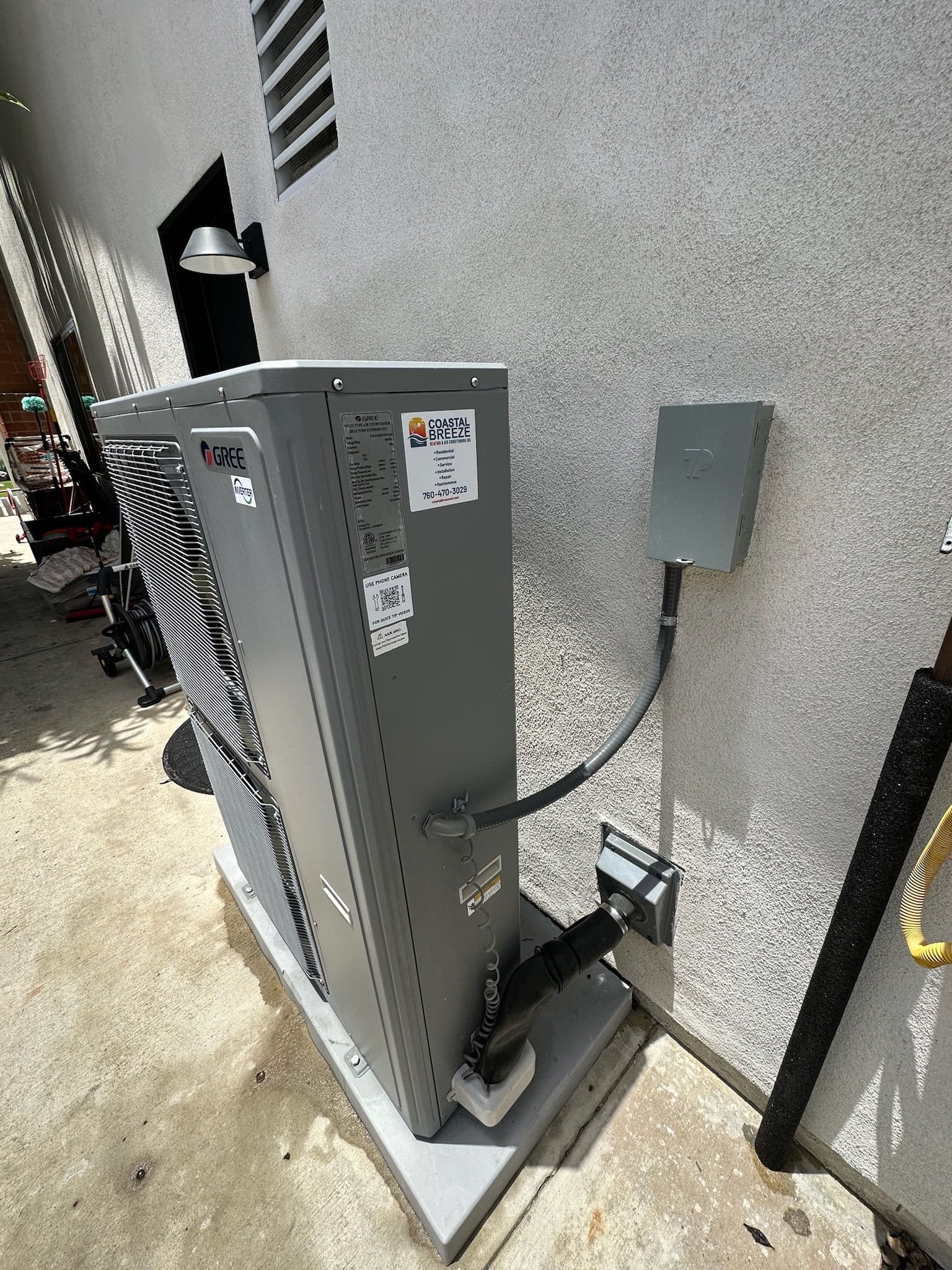
If you've spent any time in an HVAC forum lately, you've seen the same post over and over. Someone posts a quote for a new AC system and asks a room full of strangers, "Is this legit, or am I getting ripped off?" It's the most common question homeowners ask right now, and we get why. A new HVAC system is one of the biggest purchases most people make for their home, the numbers vary wildly from one company to the next, and nobody wants to feel like the one person on the block who overpaid.
So here's a straight answer from the other side of the clipboard. We're Coastal Breeze Heating & Air Conditioning, based in Carlsbad and working all over North County San Diego, and we're going to walk through exactly what a real HVAC installation costs here in 2026, what belongs in an honest quote, and how to spot the ones that are too good to be true. No pitch. Just how the sausage gets made, so you can shop with confidence whether you call us or not.
What a New AC System Actually Costs in San Diego in 2026
Let's put a real number on it. For a central air conditioning replacement in San Diego County, most homeowners in 2026 land somewhere between $8,000 and $28,000 installed. That's a wide range on purpose, because "a new AC" isn't one thing. Where you fall inside it comes down to a handful of honest variables.
The biggest one is the size and type of system your home needs. A smaller single story home in Encinitas or Carlsbad that only needs a modest system sits near the bottom of that range. A larger two story house in Escondido or San Marcos that runs hot inland and needs more capacity, or a higher efficiency variable speed system, or a heat pump, climbs toward the top.
The other big variable is your existing setup. If your ductwork is in good shape and the new equipment drops right into place, you're on the lower end. If the ducts are old, leaky, or undersized, sealing or replacing them can add anywhere from about $1,000 to $6,000 on its own. Same story with electrical upgrades, a new pad, or a hard to reach attic install.
For context, a straight AC swap for an average sized home usually lands in the $8,000 to $13,000 window. Full system replacements, meaning a new furnace or air handler paired with a high efficiency condenser or heat pump, are what push toward $15,000 to $18,000. If a quote comes in far below all of that, that's not a bargain to celebrate yet. It's a number to ask questions about, and we'll get to why.
What's Actually Inside a Legitimate Quote
A real quote isn't just equipment plus a day of labor. When you see the total, here's what you're actually paying for, and any reputable San Diego contractor should be able to point to each line.
The equipment. The condenser, the coil, the furnace or air handler, the thermostat, and all the connecting materials. Brand and efficiency tier matter here, and it's worth noting 2026 systems run on the new R-454B refrigerant, which has pushed equipment prices up roughly 10 to 20 percent over last year across the board. That's an industry wide change, not one company padding the bill.
The labor. Installation typically makes up 40 to 60 percent of the total, and that's normal. A quality install, meaning proper line sets, correct refrigerant charge, sealed connections, and a system that's actually commissioned and tested, is the single biggest factor in whether your unit lasts 15 years or dies in six. You are paying for the crew, not just the box.
The permit. In California, an AC changeout requires a permit, full stop. A permitted job means the work gets inspected and documented, and it protects you when you sell the house. A contractor who saves you money by skipping it is saving themselves the paperwork and handing you the risk.
Title 24 compliance and duct testing. This is the part out of state guides never mention, and it's a real cost. California's Title 24 energy code requires that most changeouts be verified by an independent HERS rater. That includes a duct leakage test (existing ducts generally have to come in at or below 15 percent leakage), refrigerant charge verification, and airflow confirmation. That third party testing costs money and it's not optional here. A legitimate San Diego quote has it built in.
Old system removal and disposal. Hauling away and properly disposing of your old equipment and refrigerant is part of the job. It should be in the number, not a surprise at the end.
When you see all of that laid out, a $12,000 quote stops looking like a mystery and starts looking like a sum of real parts.
Red Flags in a Quote That Looks Too Good to Be True
Here's the honest part most contractors won't say out loud. The cheapest quote is often cheap because something important got left out. When one bid comes in thousands below the others, it's usually one of these.
The first red flag is no permit. If a quote is notably low and the contractor is vague about pulling one, or suggests skipping it to save you money, that's your answer for why they're cheaper. You inherit every bit of that risk.
The second is skipping the Title 24 duct test. Leaving out the required HERS verification shaves real dollars off a bid, but it means the job isn't code compliant, and a failed or missing test can come back to bite you at resale or inspection.
The third is a mismatched system for your home. The most common version is a basic single stage unit quoted for a two story house that really needs staged or variable speed capacity to cool the upstairs evenly. It's a cheaper box, so it's a cheaper quote, but you'll feel it every August when the second floor never quite catches up.
And the quiet one: no load calculation. A good contractor sizes the system to your actual home, including square footage, insulation, windows, orientation, and how the inland heat hits it. If someone quotes you a size by eyeballing your old unit, they're guessing, and a system that's sized wrong costs you in comfort and energy bills for its entire life. It's fair to ask any contractor for the static pressure readings and load calc behind their recommendation. Most won't volunteer it. The good ones won't blink.
How to Get Three Quotes You Can Actually Compare
Everyone tells you to get three quotes. Nobody tells you that three quotes are useless if they're not measuring the same thing. Here's how to make them line up so the comparison actually means something.
First, lock the efficiency rating. Ask every contractor to quote the same SEER2 level. California's minimum for new central AC is SEER2 15, and many homeowners step up from there. A SEER2 15 system and a SEER2 20 system are different products at different prices. Comparing them is like comparing a Civic quote to an Accord quote and being shocked they differ.
Second, match the brand tier. Entry level, mid range, and premium equipment lines carry real price gaps. If one bid is a builder grade unit and another is a premium variable speed system, of course they're thousands apart. Ask each company to quote a comparable tier.
Third, confirm the scope is identical. Same system size, same ductwork plan, and, most importantly, permit and Title 24 testing included on every bid. If one quote leaves those out, it isn't cheaper, it's incomplete. Add them back mentally before you compare.
Finally, look at the warranty on labor, not just the equipment. Manufacturers warranty the parts. The contractor warranties the workmanship. A longer labor warranty tells you the company stands behind its install. When you line up three quotes that match on efficiency, brand tier, scope, and warranty, the real differences finally show up, and the "expensive" quote often turns out to be the complete one.
Why San Diego Pricing Is Legitimately Higher
If you've compared your quote to a national average number you found online and felt sick, take a breath. Southern California HVAC pricing genuinely runs about 25 to 40 percent above the national average, and it's not because contractors here are greedy. There are real reasons.
Labor costs more in San Diego than in most of the country, and skilled, licensed HVAC techs are in high demand. You're paying California wages for California licensed work, meaning C-20 licensed contractors and EPA certified techs handling refrigerant. That's a floor, not a markup.
Then there's the regulatory layer that simply doesn't exist in much of the country. Permits are required. Title 24 compliance is required. Independent HERS testing is required. Each of those adds legitimate cost, and each of them exists to make sure the system you paid for actually performs and actually meets code. Homeowners in Texas or Arizona often aren't paying for that third party verification. You are, and it's part of why your system is documented and inspected.
On top of that, 2026's refrigerant transition to R-454B raised equipment prices industry wide. And San Diego's climate mix, with a cool coastal marine layer near the water and real heat just a few miles inland, means systems here need to be sized thoughtfully rather than pulled off a one size shelf.
So when a San Diego quote runs higher than a number from Ohio, that gap isn't the contractor's margin. It's labor, code compliance, testing, and doing the job right for the climate you actually live in.
The Bottom Line
A fair quote isn't the lowest number on the pile. It's the complete one. When you understand what's inside it (equipment, quality labor, the permit, Title 24 testing, and disposal), the price stops feeling like a mystery and starts feeling like a decision you can make with your eyes open. Get three bids that genuinely match on efficiency, brand tier, and scope, ask any contractor to show their work on sizing and permits, and the honest quote will stand on its own.
If you're staring at a quote right now and want a second set of eyes, that's exactly the kind of question we're happy to answer, even if you don't end up going with us. Reach out to Coastal Breeze Heating & Air Conditioning in Carlsbad, and we'll give you a straight, itemized quote you can actually compare against the rest. Either way, you'll walk into that decision knowing what you're paying for.
Coastal Breeze Heating & Air Conditioning · Serving Carlsbad, Oceanside, Encinitas, Vista, San Marcos, Del Mar & North County San Diego
Call or text: (760) 470-3029
Email: coastalbreezeSD@gmail.com
Web: coastalbreezesd.com
Hours: Mon–Fri 7am–8pm · Sat–Sun 9am–5pm
CA Lic. #1077978
Old-school craftsmanship meets coastal comfort. Local expertise. Honest work. Comfort that lasts. That's the Coastal Breeze Way.