- Home
- Blog
- Got a New HVAC System in San Diego and It's Still Humid or Not Cooling Right? Here's What to Check
Got a New HVAC System in San Diego and It's Still Humid or Not Cooling Right? Here's What to Check
Discover why your new HVAC isn't cooling right in San Diego. Learn to identify installation and sizing issues with expert tips.
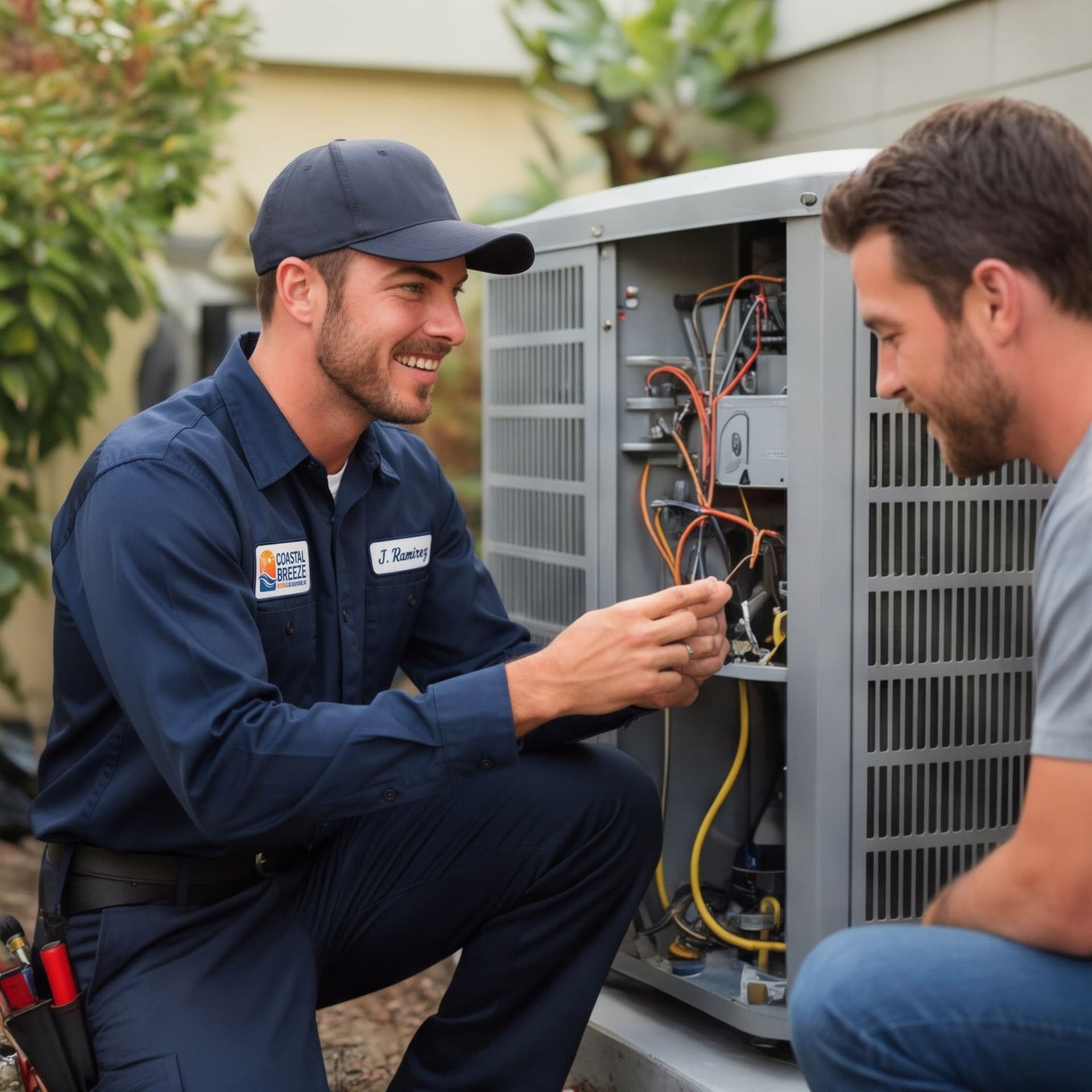
You just spent five figures on a brand new system. The old one was tired, you did your homework, you signed the contract, a crew spent a day at your house, and you expected the reward to be obvious: a cool, dry, comfortable home. Instead the thing runs and runs, the upstairs never quite gets there, and somehow the house feels clammier than it did before. And now you're doing the thing everyone does at 11pm, typing "new AC not cooling properly" into your phone and wondering if you got taken.
We see this every summer, and lately we've been seeing a lot of it. Scroll any HVAC forum right now and you'll find post after post from homeowners with equipment that's only a few weeks old, describing the exact same three symptoms: it's too humid, it won't reach the temperature on the thermostat, and it seems to run constantly. One that stuck with us this month was a homeowner in a coastal-style house with a wall of sliding glass doors, new system, and a home that just wouldn't dry out. If you're nodding along, this post is for you.
We're Coastal Breeze Heating & Air Conditioning, based in Carlsbad and working all over North County San Diego, and we want to walk you through what's actually going on, in plain language. Some of what you're feeling is normal and settles down. Some of it is a real problem that a good contractor can fix, sometimes under your warranty. The goal here isn't to sell you anything. It's to help you tell the difference, and to hand you the exact questions that separate a system that was installed right from one that wasn't. Even if you bought from someone else, you deserve to know what you paid for.
Why a New AC Can Actually Make Your House More Humid
This one surprises people, so let's start here. It feels backwards that newer, more expensive equipment could leave your home damper than the fifteen-year-old unit it replaced. But it happens, and once you understand how an air conditioner removes moisture, it makes complete sense.
Your AC does two jobs at once. It lowers the temperature (that's the "sensible" cooling you can read on a thermostat), and it pulls moisture out of the air (that's "latent" cooling, the part you feel but can't see on a display). Moisture removal is slower work. Warm, humid air has to spend real time flowing across the cold indoor coil so that water vapor condenses on it, drips into the pan, and drains away. The longer and steadier the system runs, the more water it wrings out of your house.
Here's the catch. An air conditioner only dehumidifies while it's actually running a cooling cycle. If the system blasts your rooms cold in a hurry and shuts off, it hits the temperature target long before it's had time to do the slow moisture work. The thermostat says you're done. Your skin says otherwise. That's how a house can be at 74 degrees and still feel like a locker room.
There are three usual culprits behind a new system that cools the number but not the feeling, and they're almost always about how the system was sized and set up, not the equipment itself: the system is oversized, the refrigerant charge is wrong, or the airflow across the coil is wrong. Any one of them can leave you humid. Let's take them in order.
The Oversized System Problem: Why Bigger Isn't Better on the San Diego Coast
If we could tattoo one sentence on every HVAC quote in North County, it would be this: a bigger air conditioner is not a better air conditioner. In our climate, it's usually a worse one.
Think about what "oversized" really means. An air conditioner that's too powerful for the space cools the rooms so fast that it satisfies the thermostat in just a few minutes, shuts off, and then kicks back on a little while later when the temperature drifts up. On, off, on, off, all day. That's called short cycling, and it's the enemy of a comfortable home for two reasons. First, the system never runs long enough in any single cycle to pull much moisture out of the air, so you get cold-but-clammy. Second, all that starting and stopping is hard on the equipment, so an oversized unit often wears out sooner than a right-sized one would.
Now layer in where we live. The coastal strip from Carlsbad through Oceanside and Encinitas sits under a marine layer for a good chunk of the year. Our outdoor temperatures are mild, but the air coming off the ocean carries real moisture. That combination, moderate heat and meaningful humidity, is exactly the situation where you want a system that runs longer, gentler cycles to keep drying the air, not a monster that slams the temperature down and quits. A house with a lot of west-facing glass, like that sliding-door coastal home we mentioned, has its own quirks too, but the underlying fix is the same: right-sized equipment that runs steadily beats oversized equipment that sprints and rests.
Why does oversizing happen so often? Because "bigger is safer" feels intuitive, and because sizing a system correctly takes work that a rushed installer skips. The correct way is a load calculation, called a Manual J, that accounts for your square footage, insulation, windows, orientation, and how our coastal-versus-inland climate hits your specific house. The lazy way is to look at your old unit, match the tonnage, or round up "to be safe." A lot of the humidity complaints we get on new systems trace right back to that shortcut. The equipment is fine. It's just too big for the house it's cooling.
When It Won't Reach Temperature, or Runs Constantly
The flip side shows up too, and often in the same house: a new system that runs and runs and still never quite reaches the number you set, especially on the warmer inland afternoons in San Marcos or Escondido, or on the top floor of a two-story home.
Constant running isn't automatically bad. On the hottest afternoon of the year, a properly sized system is supposed to run long and steady, and long steady cycles are actually great for humidity. So don't panic just because the unit is on for a long stretch during a heat spike. The warning sign is a system that runs nonstop and still falls short of the thermostat under ordinary conditions, or one where the upstairs is always several degrees behind the downstairs.
When that's happening on new equipment, the likely causes rhyme with the humidity ones. The refrigerant charge might be off, so the system isn't moving as much heat as it should. The airflow might be wrong, often from ductwork that's too small or too leaky for the new equipment, so cooled air never properly reaches the far rooms. Or the system was matched to the house on paper but the duct system it's blowing through was never evaluated, which is a little like putting a strong engine on clogged plumbing. Again, notice the theme: the box on the side of your house is rarely the problem. How it was charged, set up, and connected to your ducts is where new-system trouble almost always lives.
What Proper Commissioning Actually Looks Like
Here's the part of a new installation that homeowners never see, and that separates a system that performs from one that disappoints. In the trade it's called commissioning: the set of measurements and adjustments a crew makes after the equipment is bolted in but before they call the job done. A great install is maybe half about hanging the equipment and half about commissioning it correctly. When your new system underperforms, this is usually the step that got rushed.
Proper commissioning means, at a minimum, three things happen and get verified.
The refrigerant charge is measured and dialed in, not guessed. The amount of refrigerant in the system has to be right for your equipment and your line set, and it's confirmed with gauges and temperature readings (techs talk about "superheat" and "subcooling"). An overcharged or undercharged system loses capacity and moisture removal. A good tech charges by measurement and writes the numbers down. A rushed one connects it, feels that cold air is coming out, and leaves.
The blower and airflow are calibrated for cooling, not left on a factory default. This is a big, under-appreciated one for humidity. Move too much air across the coil and it never gets cold enough to condense water, so the house stays damp; move too little and you lose capacity. The target most systems aim for is somewhere around 350 to 400 cubic feet per minute of air per ton of cooling, and dialing toward the lower end of that range is one of the levers a good tech uses to squeeze more moisture out of the air in a humid coastal home. On modern variable-speed equipment there are actual dehumidification settings that can be enabled. If nobody touched the blower setup, odds are it's not optimized for our climate.
The ducts are pressure-tested and the airflow is confirmed. In California this isn't just best practice, it's code. Title 24 requires that most changeouts be verified by an independent HERS rater, including a duct leakage test, refrigerant charge verification, and airflow confirmation. That third-party test is one of the best things that can happen to you as a homeowner, because it forces the exact measurements that catch a leaky duct or a bad charge. If your installer treated the HERS test as a real diagnostic instead of a box to check, a lot of the problems in this article get caught before you ever feel them.
If you're staring at a new system that's misbehaving, the single most useful question you can ask is whether it was actually commissioned: were the charge, the airflow, and the duct leakage measured and recorded? A contractor who did it will have numbers. A contractor who didn't will change the subject.
When High Humidity After a New Install Is Normal, and When It's a Warranty Problem
Not every damp week means you were wronged, so let's draw an honest line.
Some humidity right after installation is genuinely normal. If your old system was failing for a while, your house and everything in it, the drywall, the furniture, the carpet, may have soaked up moisture, and it takes a new system some days of steady running to pull all of that back down to comfortable. Break-in period aside, a stretch of heavy marine layer or a run of muggy days will make any home feel more humid, and a right-sized system that's cooling on mild days simply won't run long enough to dry the air aggressively, because it doesn't need to cool much. On a cool, damp coastal morning, a little clamminess isn't a defect. Give a new install a couple of weeks of varied weather before you judge it.
What is not normal, and what points toward a real installation or equipment problem, is a pattern that doesn't improve. If weeks have gone by and your home consistently sits above roughly 55 to 60 percent relative humidity while the AC is running, if the system short-cycles noticeably on ordinary days, if it never reaches the thermostat setting under normal conditions, or if you're seeing condensation, musty smells, or the house is cold and clammy at the same time, those are signs that something was sized, charged, or set up wrong. That's not something you should live with, and it's usually not something you should pay extra to fix.
This is where knowing your warranty matters. New equipment carries a manufacturer's parts warranty, and a reputable installer stands behind their workmanship for a period on top of that. Problems caused by improper sizing, a bad charge, or airflow that was never calibrated are installation issues, which means fixing them is on the contractor, not on you. A company that installed it right will come back and make it right. If the company you bought from is dodging you, that itself is telling, and it's a big part of why homeowners who bought from a here-today rock-bottom installer end up calling a local shop like ours for a second opinion. You're allowed to get one.
Questions to Ask Before You Accept the Job (or to Ask Now, If It's Already In)
The best time to prevent all of this is before you sign, but these questions work just as well after the fact when you're trying to figure out what went sideways. Ask any contractor and listen for whether they answer in specifics or in shrugs.
Ask, "Did you run a Manual J load calculation to size this, or are you matching my old unit?" The right answer involves an actual calculation for your house. Matching the old tonnage or rounding up "to be safe" is how oversizing and humidity problems get baked in on day one.
Ask, "How will you set and verify the refrigerant charge, and will I get the numbers?" You want to hear that they charge by measurement and record it. A system charged by feel is a coin flip.
Ask, "Will you calibrate the blower airflow for our humidity, and does this equipment have a dehumidification mode?" This tells you whether they'll optimize the system for our marine-layer climate or leave it on a generic factory setting that's fine for Phoenix and wrong for Carlsbad.
Ask, "Are you evaluating my existing ductwork, or just connecting the new unit to it?" New equipment on old, leaky, undersized ducts is one of the most common reasons a strong system can't reach the far rooms. A good contractor looks at the whole path, not just the box.
Ask, "Will this pass the Title 24 HERS test, and will you walk me through the results?" The independent test is required here anyway, so the real question is whether they treat it as a genuine performance check you get to see, or paperwork they'd rather you ignore.
The thread running through all five is the same one that runs through every honest HVAC conversation. You didn't just buy a piece of equipment. You bought the sizing, the charge, the airflow, the duct work, and the verification that ties it all together, and the contractor who can speak plainly to each of those is the one who earned your money.
The Bottom Line
A brand new system that's humid, won't hit temperature, or runs constantly is frustrating precisely because you did everything right and expected better. But in almost every case, the equipment isn't the villain. The culprit is how it was sized, charged, and set up, an oversized unit that short-cycles in our damp coastal air, a refrigerant charge left to guesswork, or a blower and duct system that were never calibrated for the way San Diego actually feels. Give a fresh install a couple of weeks of mixed weather to settle. But if it stays clammy, keeps falling short, or short-cycles on ordinary days, that's not you being picky. That's a real problem, often a warranty problem, and you shouldn't have to live with it.
If you've got a new system that isn't performing and you want an honest second opinion, that's exactly the kind of thing we're glad to look at, even if we didn't install it and even if you don't end up going with us. Reach out to Coastal Breeze Heating & Air Conditioning in Carlsbad, and we'll measure what your system is actually doing, tell you plainly whether it was set up right, and help you figure out who should be fixing it. You paid for comfort. You should get it.
Coastal Breeze Heating & Air Conditioning · Serving Carlsbad, Oceanside, Encinitas, Vista, San Marcos, Del Mar, Solana Beach, La Jolla & North County San Diego
Call or text: (760) 470-3029
Email: coastalbreezeSD@gmail.com
Web: coastalbreezesd.com
Hours: Mon–Fri 7am–8pm · Sat–Sun 9am–5pm
CA Lic. #1077978
Old-school craftsmanship meets coastal comfort. Local expertise. Honest work. Comfort that lasts. That's the Coastal Breeze Way.