Mini Split Ice Formation and Refrigerant Leak Repair in Oceanside
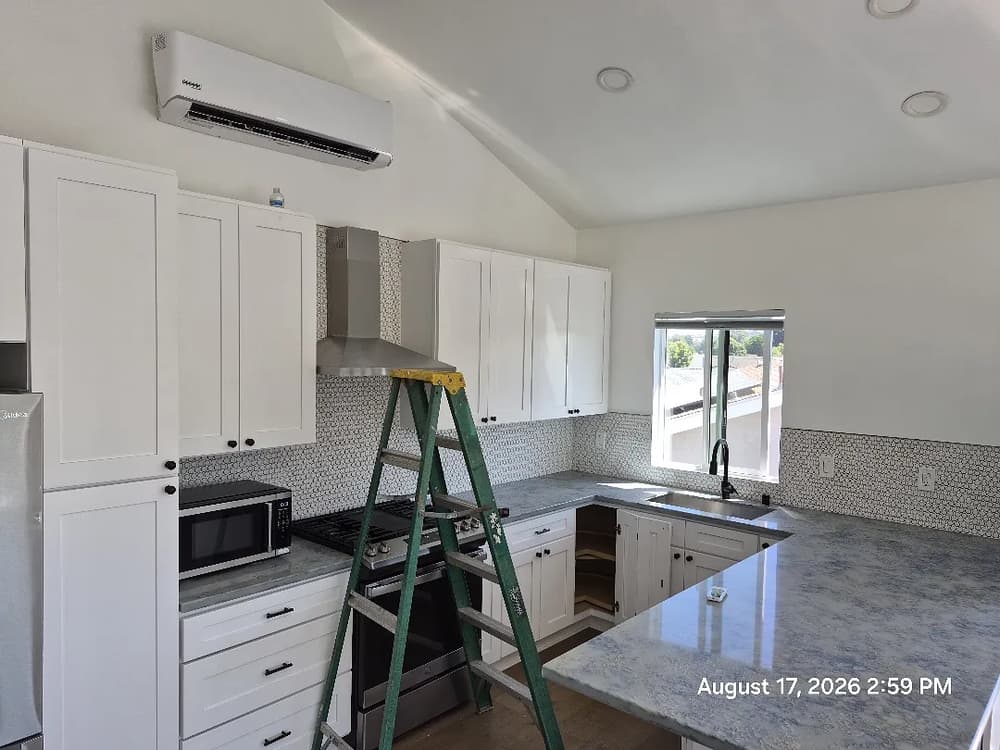
When a mini split starts forming ice on the evaporator coil, that's not a quirk. It's a red flag. We got called out to a home in Oceanside to dig into exactly that situation. Ice had built up on both the evaporator coil and the high side valve, which told us right away that something was off with the refrigerant charge.
Once we recovered the refrigerant, the numbers confirmed it. The system holds 3.5 lbs of R410A from the factory. We pulled out 1.6 lbs. That's less than half of what should be there. A system running that low on refrigerant can't do its job. It runs harder, cools less, and keeps icing over in a cycle that only gets worse over time.
The placement of this indoor unit made things more complicated. It's mounted directly above the kitchen hood, and cooking grease had made its way into the evaporator coil, the filters, and the blower wheel. That kind of grease buildup restricts airflow and contributes to the kind of excessive condensation we were seeing. It's also exactly why annual maintenance on a mini split in a kitchen environment isn't optional. It's critical!
On the follow-up visit, we used UV dye to track down the source of the refrigerant loss. We found it. Dye present in the indoor evaporator coil and at the suction line flare connection. The repair path was clear: re-flare the copper to factory torque specs and replace the indoor evaporator coil. Both were approved and completed.
This one had a few layers to it; low refrigerant, a contaminated coil, and a leaking flare connection all working against the system at once. Catching it early and addressing each issue individually is what gets a system back to running the way it should.