Bosch High-Efficiency Attic HVAC Install in Fallbrook CA
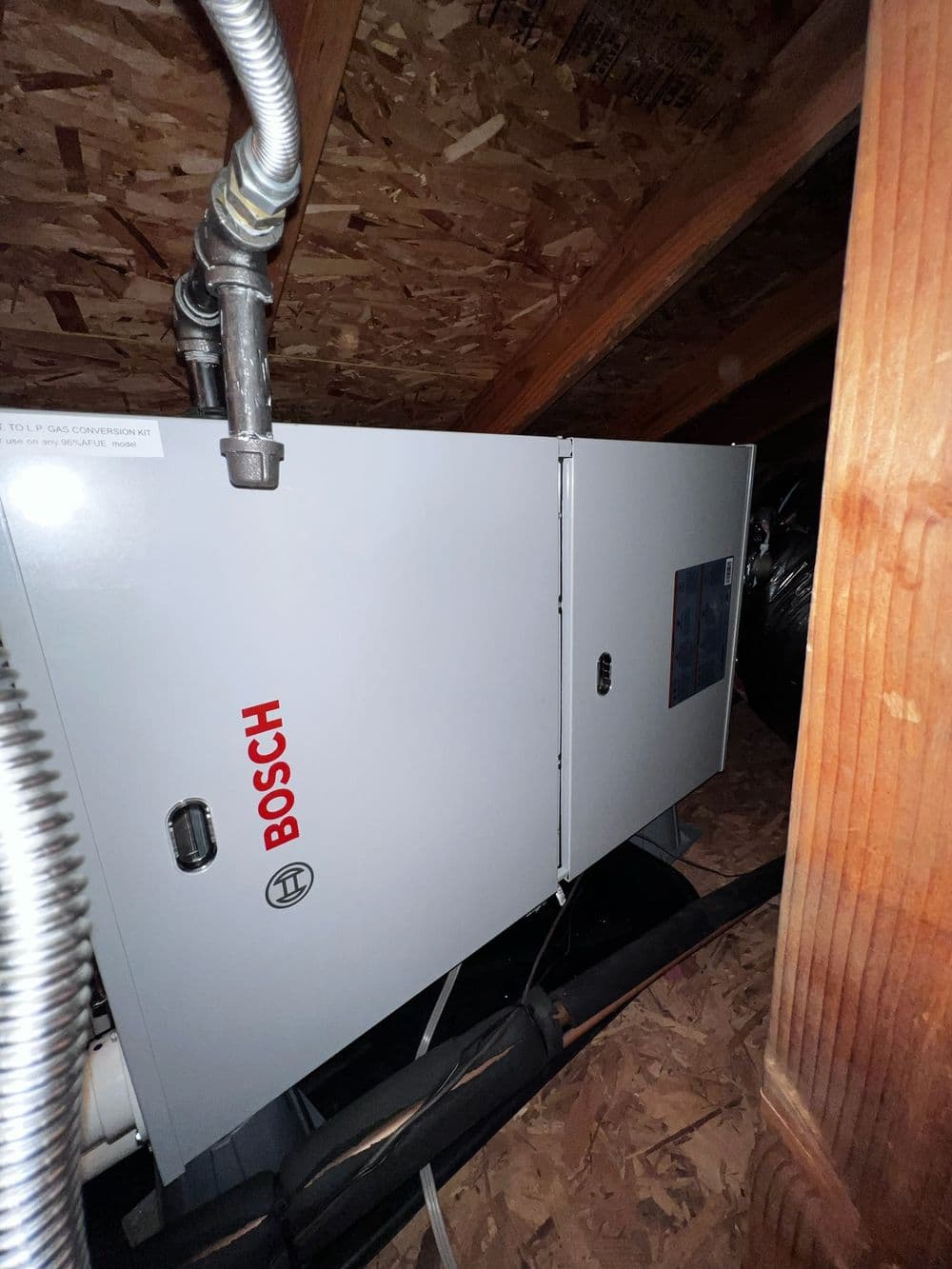
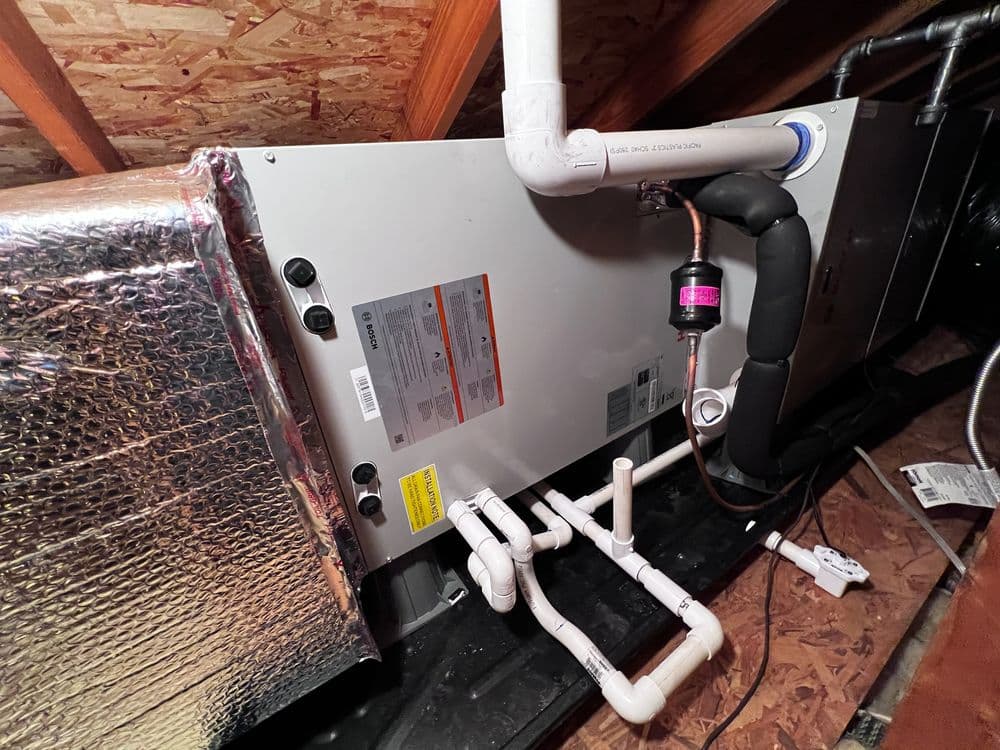
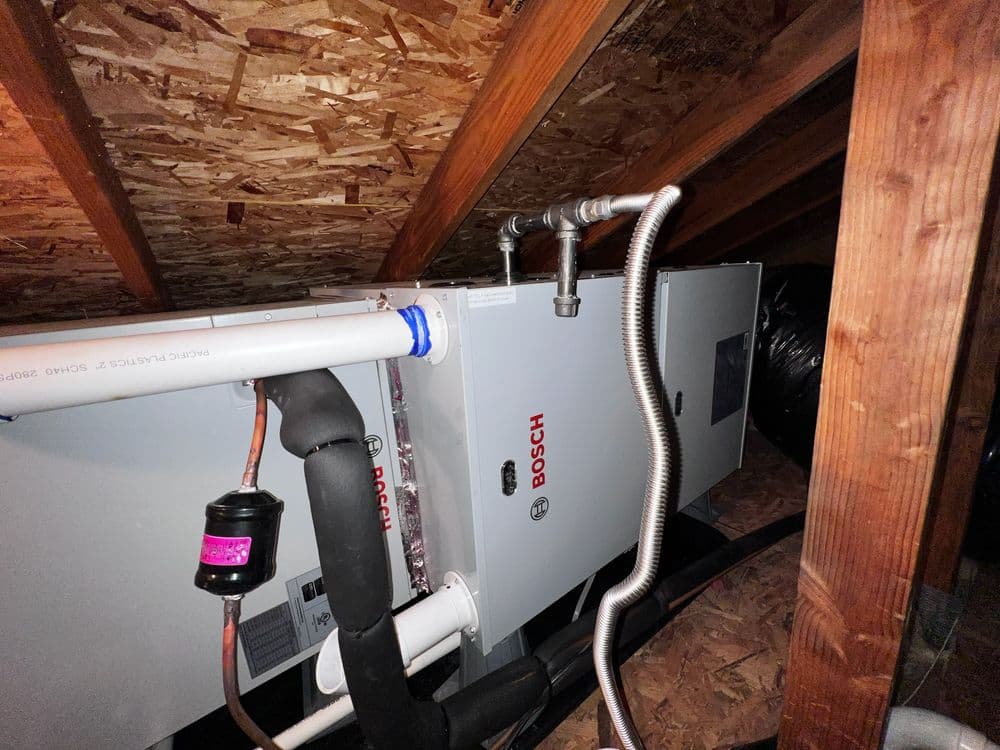
Attic HVAC installs are not all created equal. When the space is tight - low clearance, existing framing in the way, and everything needs to be routed around structural members - the job demands a level of planning that goes well beyond a standard swap-out. That's exactly what we were working with on this Fallbrook home.
We went with a Bosch high-efficiency unit installed horizontally to fit within the constraints of the attic. That orientation change alone requires careful thought about airflow direction, condensate drainage, and how to position the system so a technician can actually get to it later without a nightmare. We planned service access from the start, not as an afterthought.
The connections are where you really see the difference between a rushed job and a clean one. Gas piping, electrical, insulated refrigerant lines, and the condensate drain assembly were all routed deliberately - keeping everything tight to the unit and clear of the framing. The PVC condensate drain work especially required attention given the horizontal orientation and the tight overhead clearance.
Homes in Fallbrook see enough temperature swings that having an HVAC system running at peak efficiency genuinely matters. A properly installed high-efficiency unit in a well-planned attic setup means lower energy waste, fewer stress points on the equipment, and a system that holds up over the long haul - not just the first season.