AC Refrigerant Recharge and Capacitor Replacement in San Marcos
This system had a few things working against it at the same time. A failed 70/5 MFD capacitor, a low refrigerant charge, and a leaking Schrader valve core. Any one of those issues on its own can cause the system to underperform - combined, the unit was working way too hard to keep up.
We swapped out the bad capacitor first. That part carries a one-year parts and labor warranty, so the homeowner has solid coverage there. Then we moved on to addressing the refrigerant side of things. The system was low on R-410A, so we recharged it back to factory spec - targeting a 10 degree subcooling to make sure it was dialed in properly, not just topped off and called good.
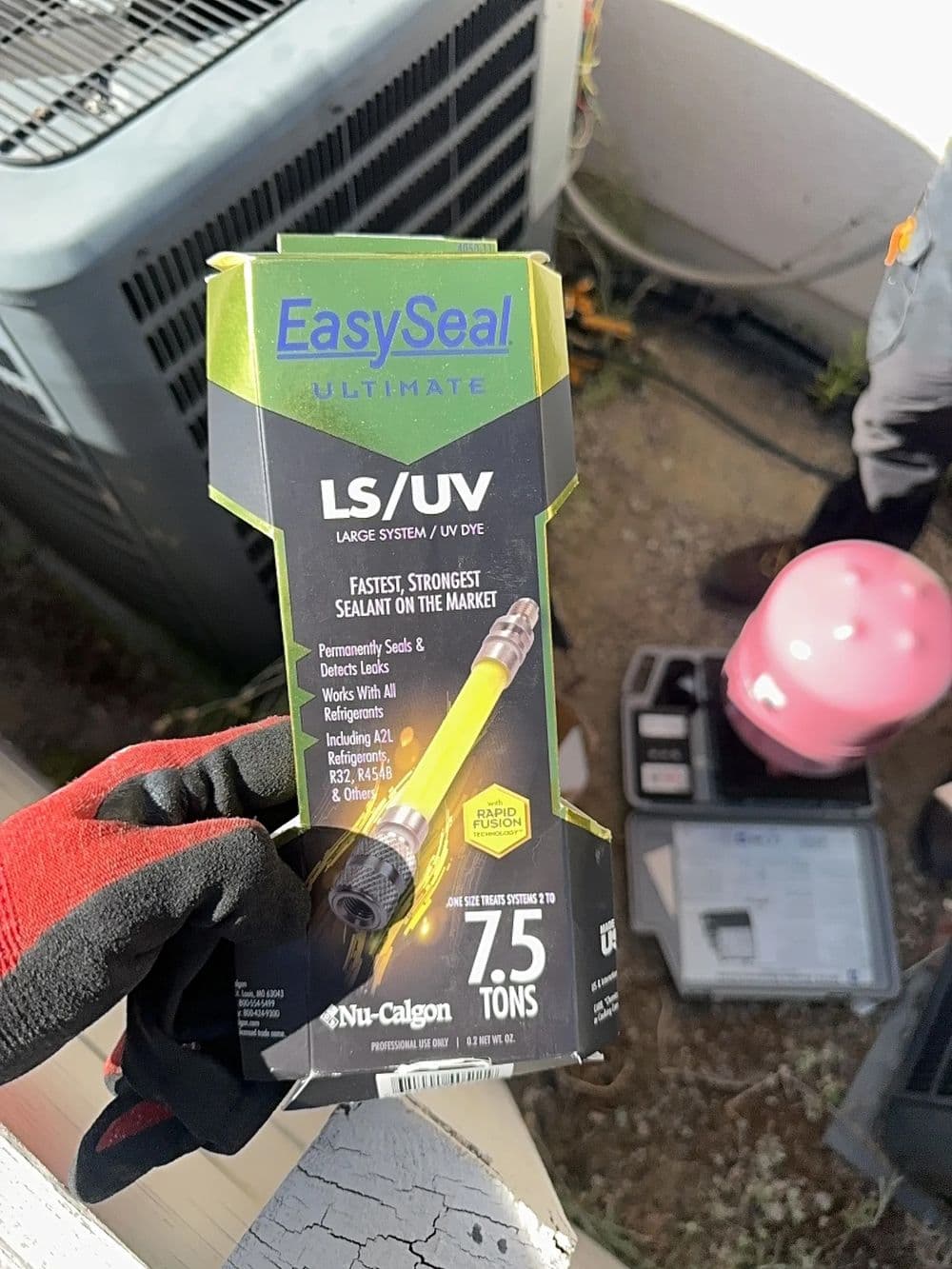
Here is where it gets a little more involved. Because the system had a known refrigerant loss, we injected Nu-Calgon EasySeal Ultimate LS/UV into the system. This does two things. The sealant works to close off small leaks in the refrigerant circuit. The UV dye stays in the system so that if the leak has not fully sealed, we can come back with a UV light and pinpoint exactly where refrigerant is escaping. We always want to be upfront - the sealant is not a guaranteed fix, but it gives the system the best shot before going straight to a more invasive repair.
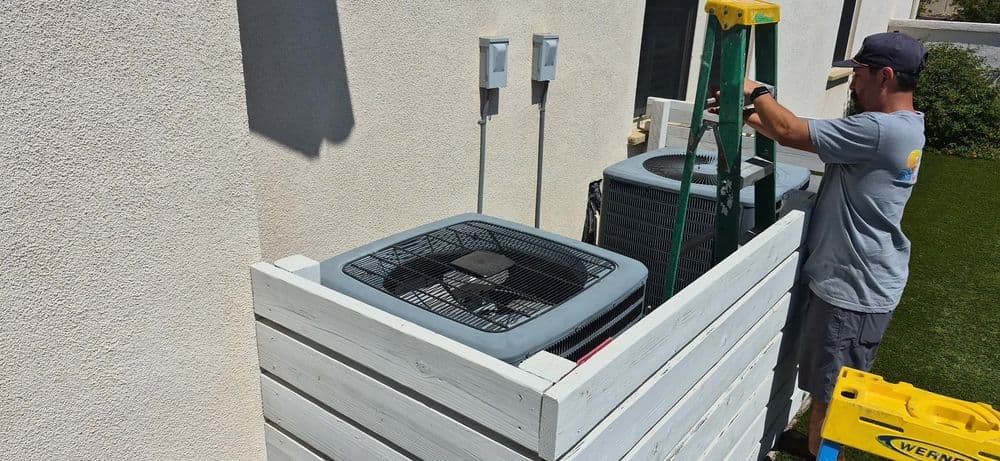
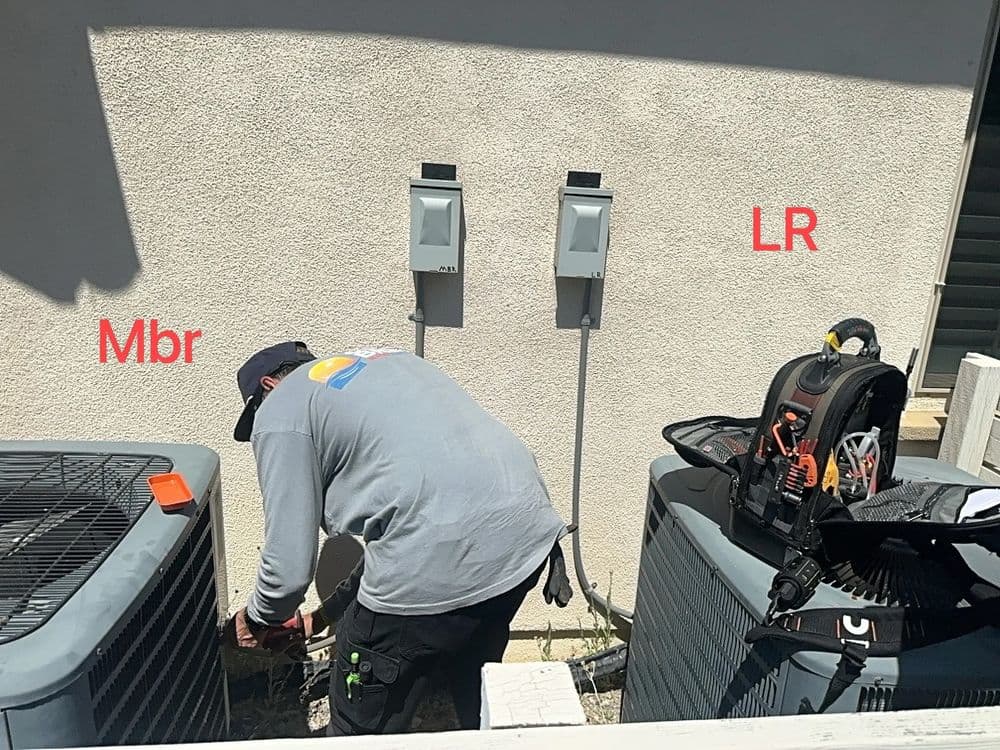
We also found and addressed the leaking Schrader valve core, which is a common and easy-to-overlook source of refrigerant loss. Small issue, but it adds up over time. With two condensing units side by side - one serving the master bedroom zone and one for the living room - staying organized and methodical on a call like this matters a lot.
We have a follow-up visit scheduled in 6-8 weeks to run a full preventative maintenance and check refrigerant pressures again. That visit will confirm whether the sealant held and give us a clear picture of where the system stands heading into the cooler months.